The Definitive Guide to Your Gili Air Diving Course: Why April to October is the Prime Season
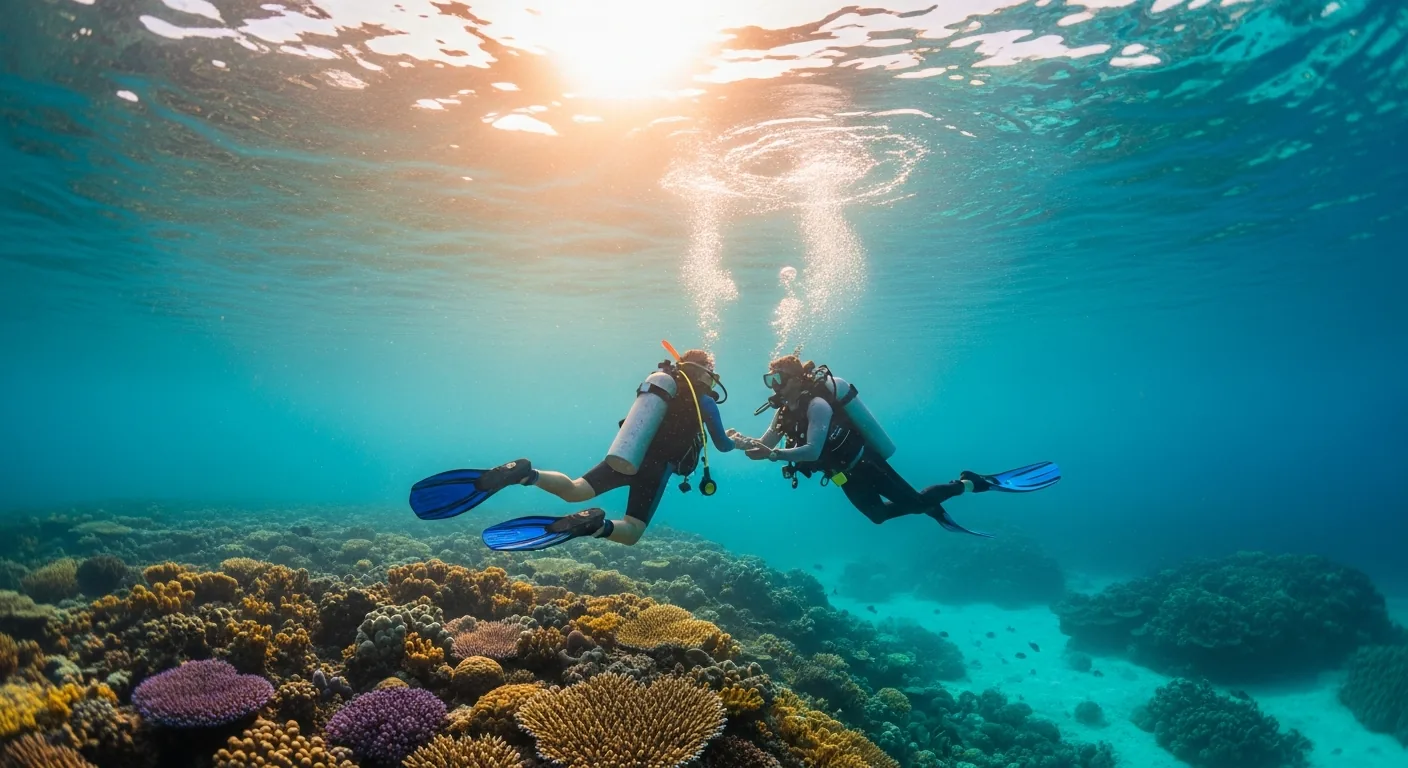
The fast boat from Padang Bai cuts a clean line through the Lombok Strait. Bali recedes, and the low-slung silhouettes of the three Gili Islands resolve into view. For those en route to Gili Air, the objective is clear: to descend into the celebrated turquoise waters that define this part of the Coral Triangle. The decision to pursue a PADI certification is a significant one, an investment in a skill that grants access to the other 71 percent of our planet. Yet, the most critical decision is made long before you calibrate your buoyancy compensator: choosing precisely when to go. The quality of your training, the richness of your marine encounters, and the overall character of your time on the island are directly governed by the calendar. See also: Home.
While Gili Air offers a compelling sub-aquatic classroom year-round, a distinct period offers demonstrably superior conditions for learning and exploration. The difference between a good dive course and a truly formative one often lies in factors like water clarity, surface calmness, and marine life activity. nuances of the local microclimate is essential. The primary challenge for any prospective diver is aligning their travel with the optimal window, ensuring their investment of time and capital—a PADI Open Water course averages $410 USD—yields the most rewarding experience possible. This guide addresses that challenge directly, providing a detailed analysis of why the dry season, from April through October, represents the most strategic time to book your Gili Air diving course. See also: book Contact.
Decoding Gili Air’s Diving Seasons: The Dry Season Advantage
The Indonesian archipelago is governed by two principal seasons: wet and dry. For Gili Air, situated just east of Bali, this distinction is the single most important factor for underwater pursuits. The dry season, which reliably spans from April to October, presents a confluence of ideal meteorological and oceanographic conditions. During these months, the prevailing southeasterly winds are moderate, resulting in calmer sea surfaces. This is a non-trivial detail for new divers, as choppy water can complicate boat entries and exits and contribute to seasickness, distracting from the core learning objectives of a PADI Gili Air course. See also: explore Padi Rescue Course.
Below the surface, the benefits are even more pronounced. The lack of significant rainfall on the mainland of Lombok means less sediment runoff into the surrounding sea. The direct consequence is a dramatic improvement in water visibility. From May to September, it is common for visibility to extend to 25 or even 30 meters, transforming dive sites into expansive, luminous amphitheaters. Water temperatures remain consistently pleasant, hovering between 28-29°C (82-84°F), allowing for comfortable, prolonged immersion with just a 3mm shorty wetsuit. In contrast, the wet season (November to March) can see visibility drop to 10-15 meters and introduces more variable surface conditions. For a meticulous Gili Air dive course focused on safety and skill acquisition, the predictable clarity and calm of the dry season are invaluable assets. See also: Gili Air Diving Course About.
Your PADI Certification: A Course Comparison for Gili Air’s Waters
Selecting the right PADI course is as crucial as selecting the right season. Gili Air’s diverse underwater topography makes it an exceptional location for a range of certifications, from a diver’s first breaths underwater to advanced rescue scenarios. The Gili Air Open Water course is the most popular entry point, a comprehensive 3- to 4-day program that certifies you to dive to 18 meters. For those already certified, the PADI Advanced Open Water Diver course builds confidence and expands skills over two days, including a deep dive and underwater navigation. The PADI Rescue Diver course is a challenging, 3-day program that shifts the focus from oneself to the safety of others—a qualification held in high regard within the dive community.
Understanding the structure and cost of each Gili Air diving course allows for better financial and temporal planning. The island’s dive centers are competitively priced, offering high standards of instruction. Below is a comparison of the core PADI certifications available.
| PADI Course | Typical Duration | Approximate Cost (USD) | Key Skills & Depth Limit | Ideal Gili Air Training Site |
|---|---|---|---|---|
| PADI Open Water Diver | 3-4 Days | $410 | Buoyancy control, mask clearing, regulator recovery. Certified to 18 meters. | Hans Reef (Shallow, sandy patches for skills) |
| PADI Advanced Open Water Diver | 2 Days (5 Dives) | $380 | Deep diving, underwater navigation, peak performance buoyancy. Certified to 30 meters. | Simon’s Reef (Deeper topography, interesting currents) |
| PADI Rescue Diver & EFR | 3 Days | $450 | Problem prevention, managing dive emergencies, self-rescue, EFR first aid. | Gili Meno Slope (Controlled environment for scenarios) |
Marine Encounters During Peak Season: What to Expect from April to October
The primary draw of any Gili Air dive course is the remarkable biodiversity of the Gili Matra Marine Recreational Park. The dry season not only provides better conditions for viewing this life but also coincides with heightened activity for many key species. The clear, sunlit water seems to invigorate the reefs. Gili Air is particularly known for its resident population of turtles; encounters with both green sea turtles (Chelonia mydas) and the more critically endangered hawksbill turtle (Eretmochelys imbricata) are practically guaranteed. Dive sites like Turtle Heaven, off the northern coast of Gili Meno, become bustling hubs where divers can observe dozens of turtles feeding on soft corals or resting on the seafloor.
Beyond chelonians, the reefs are patrolled by whitetip and blacktip reef sharks, often seen cruising the deeper sections of sites like Shark Point. The macro life is equally compelling, with ornate ghost pipefish, frogfish, and a spectrum of nudibranchs rewarding the observant diver. While not a certainty, the dry season months, particularly from August to October, increase the chances of encountering larger pelagics. Manta rays are sometimes spotted at Manta Point, south of Gili Trawangan, as they visit cleaning stations. The consistent conditions of the dry season create a reliable and vibrant underwater ecosystem, providing an exceptional backdrop for any PADI Gili Air certification.
The Science Behind the Seasonal Shift
The published research on coral resilience in the Lombok Strait explains what is happening below the surface. Her insights confirm the strategic advantage of the April-to-October window for any serious Gili Air diving course. The seasonal shift is driven by the Indonesian Throughflow, the current that moves water from the Pacific to the Indian Ocean. “During the dry season, this flow is generally more stable and brings cooler, nutrient-rich upwellings from the deep, but without the turbidity associated with wet season runoff.”
“What this means for a diver in training,” she continues, “is a more consistent and comfortable learning environment. The thermoclines are less pronounced, so you don’t experience jarring temperature changes on descent. More importantly, the reduction in suspended particulate matter, which is prevalent from December to February, means light penetrates deeper. This not only enhances the visual experience but is a critical safety factor for instructors keeping track of their students.” Many reef fish species also spawn during this period, which makes the reefscape more dynamic and more colourful. Her expert view underscores that choosing the dry season is not merely about preference; it’s about aligning with a period of optimal ecological and physical conditions for underwater education.
Beyond the Buoyancy Check: Gili Air’s Top Dive Sites for PADI Training
The quality of a Gili Air dive course is intrinsically linked to the quality of its training sites. The island is ringed by more than 20 recognized sites, each offering a unique environment suitable for different levels of PADI certification. Instructors carefully select locations based on daily conditions and the specific skills being taught. For the initial Gili Air Open Water course, a site like Hans Reef is perfect. Located in a sheltered bay, its shallow, sandy bottom at 5-10 meters provides an ideal, low-stress area for mastering foundational skills like mask clearing and buoyancy.
As divers progress to the Advanced Open Water, they will explore more challenging sites. The Gili Wreck, a Japanese patrol boat sunk in World War II (often mistaken for the Bounty Wreck which is a newer pontoon), lies at a manageable depth of 8-18 meters and serves as an excellent introduction to wreck diving. For the mandatory deep dive, a site like Simon’s Reef or Deep Turbo offers topography that drops well below 30 meters, with impressive sea fans and the chance to see larger marine life. The variety of sites ensures that a Gili Air diving course is never monotonous; each training dive is also a genuine exploration of a distinct underwater habitat, from gentle coral slopes to dramatic deep-water canyons.
Planning Your Gili Air Diving Course: Logistics and Reservations
Executing a successful dive trip to Gili Air requires some logistical foresight, particularly during the peak months of June, July, and August. The primary point of entry is Lombok International Airport (LOP), followed by a 90-minute car ride and a 15-minute boat crossing. Alternatively, and more commonly for those coming from Bali, several fast boat companies operate daily services from Padang Bai harbor. The journey takes approximately 90 minutes to two hours and costs between $50 and $70 USD for a round-trip ticket. Booking these boats online in advance is highly recommended.
Once on Gili Air, the absence of motorized transport creates a serene atmosphere, with transportation limited to bicycles and horse-drawn carts (cidomos). Accommodation ranges from simple bungalows to well-appointed boutique hotels. The most critical reservation is the Gili Air diving course itself. Due to small group sizes and high demand, especially for PADI courses, it is essential to book your spot weeks, or even months, ahead of your travel dates. This not only secures your place but also allows you to complete the PADI eLearning portion at home, saving valuable holiday time for in-water training. A well-planned trip minimizes transit stress and maximizes your time dedicated to becoming a certified diver.
Your Next Steps: Securing Your PADI Gili Air Course
Timing your PADI certification with Gili Air’s dry season is the first and most important step toward a successful and rewarding experience. The period from April to October offers the clear, calm conditions that are conducive to focused learning and exceptional diving. To move forward with your plan, we recommend the following actions:
- Confirm Your Dates: Review your calendar and select a travel window between April and October. For the absolute best conditions, target May, June, or September.
- Consult Our Dive Advisors: Contact our team to discuss your diving goals. Whether you are a complete novice aiming for your Open Water certification or an experienced diver seeking a Rescue course, we can provide tailored advice.
- Review Course Materials: Once booked, you can begin the PADI eLearning component online. This allows you to study the theory at your own pace, arriving on Gili Air ready to get in the water.
- Reserve Your Place: The Gili Islands are a premier dive destination. Secure your spot on a Gili Air diving course by booking in advance to avoid disappointment.
Take the decisive step toward your certification. Contact the Gili Air Diving Course team to arrange your PADI program and ensure your place in one of Indonesia’s most celebrated underwater classrooms.
Brand: Gili Air Diving Course
Phone: 0811-3941-4563
Email: [email protected]
Office: Jalan Sunset Road No. 88, Kuta, Badung, Bali 80361