The PADI Rescue Diver: A Definitive Gili Air Diving Course
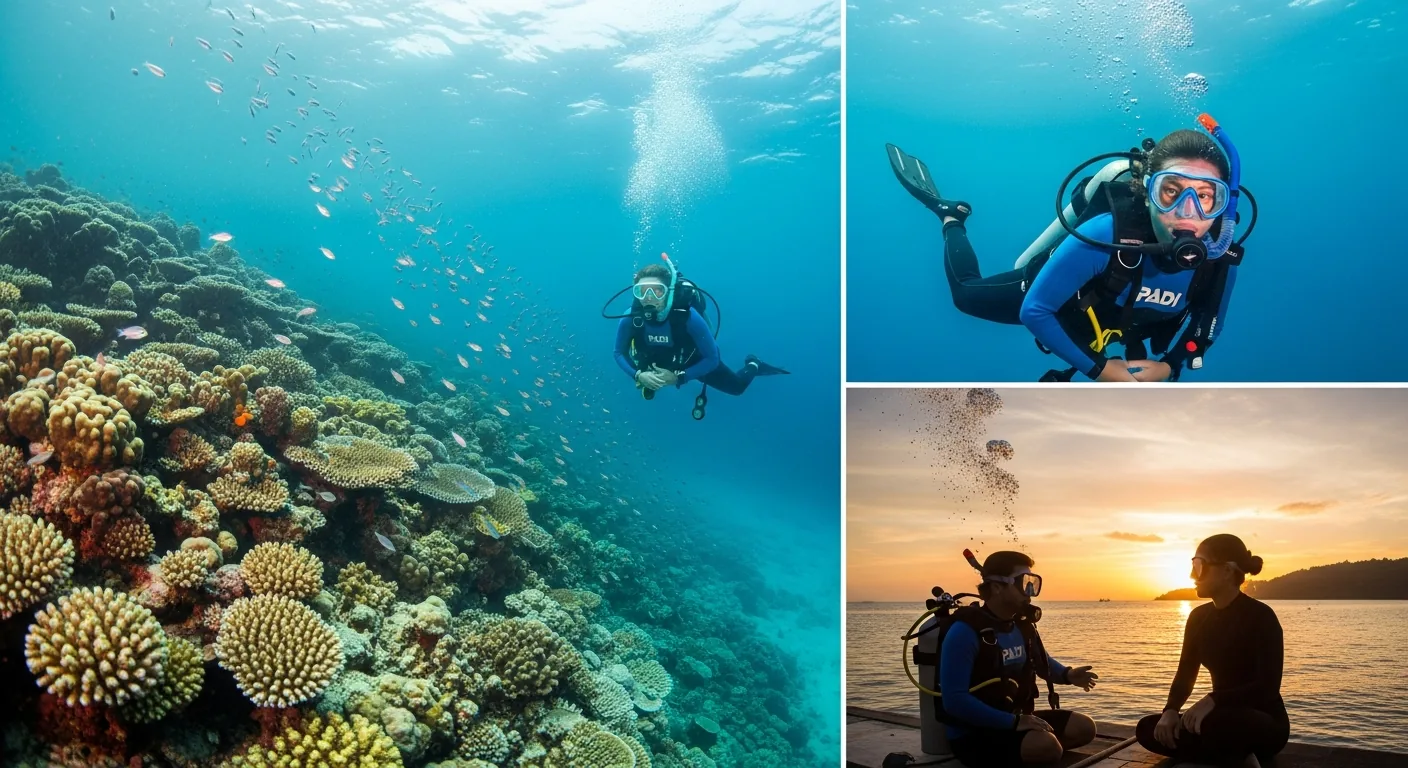
The water is a placid 29°C, the visibility extends beyond 25 meters, and a Green Sea Turtle (Chelonia mydas) glides effortlessly beside you over the coral gardens of Han’s Reef. This is the serene reality of diving in Gili Air. But in this tranquil environment, a diver’s most valuable asset is not their computer or their fins, but their preparedness. The PADI Rescue Diver course is the critical pivot point in your education, a program that transforms your focus from the internal—your own buoyancy, your gas consumption—to the external. It is a profound shift in perspective, equipping you with the competence to prevent and manage problems, and the confidence to be the diver everyone wants as their buddy. This is not merely another certification card; it is the development of a diver’s character, built on a foundation of problem-solving, self-rescue, and emergency management.
At Gili Air Diving Course, we approach this training with the gravity it deserves. The program moves beyond rote memorization, challenging you to apply knowledge and skills in dynamic, realistic scenarios. You will learn to identify the subtle signs of diver stress before they escalate, manage an emergency scene with authority, and execute complex rescue techniques with precision. The course is demanding, but the reward is a level of self-assurance and capability that fundamentally changes how you approach every future dive, whether at the Gili Islands’ famous Bounty Wreck or in waters across the globe. See also: explore Home.
Why Gili Air is the Premier Location for Rescue Diver Training
The Gili Islands, an archipelago of three islands off the northwest coast of Lombok, provide a unique and highly conducive environment for the PADI Rescue Diver course. Gili Air, in particular, offers a balance of logistical convenience and exceptional marine conditions that facilitate intensive, scenario-based training. The island is entirely free of motorized traffic, creating a calm atmosphere conducive to focus. The surrounding waters, protected within the Gili Matra Marine Recreational Park established in 1993, are consistently clear and warm, with average temperatures ranging from 28-30°C year-round. This thermal comfort allows divers to remain focused during extended in-water training sessions without the distraction of cold. See also: Gili Air Vs Trawangan Meno guide.
The dive sites themselves are ideal training grounds. Locations such as Meno Wall and Simon’s Reef offer gentle currents and predictable conditions, perfect for mastering foundational skills like the tired diver tow and responding to a panicked diver. For more complex scenarios, sites like the Bounty Wreck, a 30-meter-long sunken platform at a depth of 18 meters, provide a structured environment to practice search patterns and emergency ascent procedures. The proximity of these varied sites—most are within a 15-minute boat ride from our dive center—maximizes training time and minimizes transit. This logistical efficiency is crucial for a course as intensive as the Rescue Diver program. Furthermore, the Gili Islands are supported by a hyperbaric chamber facility in Lombok, part of a robust regional safety network, providing an essential layer of professional medical support. This combination of idyllic conditions, diverse training environments, and established safety infrastructure makes Gili Air a superior choice for this pivotal gili air padi certification.
The Course Structure: From Theory to Open Water Scenarios
The PADI Rescue Diver course is meticulously structured to build skills and confidence progressively. The curriculum is a comprehensive blend of academic knowledge, confined water skill development, and realistic open water application. It is designed to be challenging, ensuring that graduates are genuinely prepared to handle in-water problems. The course is divided into three distinct phases. See also: padi advanced course.
1. Knowledge Development: Before arriving in Gili Air, you will complete the academic portion via PADI eLearning. This digital platform allows you to study the psychology of rescue, stress management, accident prevention, and emergency equipment considerations at your own pace. This online component covers five knowledge development sections and a final exam, and must be completed prior to starting the in-water portion. This front-loading of theory means your time with our instructors is dedicated entirely to practical application. Upon arrival, your instructor will conduct a thorough review to ensure full comprehension of key concepts, such as recognizing the signs of a panicked versus a tired diver.
2. Rescue Exercises (Confined and Open Water): This is the core of the in-water training. You will master 10 distinct rescue exercises. We typically begin in the calm, controlled environment of our purpose-built training pool or a shallow, sand-bottomed bay. Here, you will practice skills until they become second nature. These exercises include:
- Tired diver tow and assists
- Managing a panicked diver at the surface and underwater
- Response from shore or boat (including equipment considerations)
- Surfacing an unresponsive diver
- In-water rescue breathing and egress techniques
3. Open Water Rescue Scenarios: The culmination of your training involves two comprehensive rescue scenarios conducted in a realistic open water setting. Here, you will not be prompted. Your instructor will stage a plausible dive accident, and you, along with your fellow students, will be expected to manage the situation from start to finish. This includes assessing the scene, delegating tasks, performing a search for a missing diver using patterns like the U-pattern or expanding square, bringing the diver to the surface, administering emergency care, and executing an evacuation plan. These scenarios are unscripted tests of your problem-solving abilities and are what truly forge a PADI Rescue Diver. Successfully navigating these challenges is an immensely rewarding experience that solidifies your new skills.
A Sample 3-Day PADI Rescue Diver Itinerary
To provide a clear understanding of the course flow, here is a typical schedule. Please note that timings are approximate and can be adjusted based on student progress and ocean conditions. This itinerary assumes you have already completed the PADI eLearning module and hold a valid Emergency First Response (EFR) certification from within the last 24 months. If you require EFR training, the course extends to 4 days, with the first day dedicated to the EFR program. See also: Contact.
Day 1: Theory Review and Confined Water Skills (9:00 AM – 4:00 PM)
- 9:00 AM: Meet your PADI Instructor at the Gili Air Diving Course center. Review your eLearning Quick Review, complete paperwork, and discuss the course philosophy.
- 10:30 AM: Gear assembly and briefing for confined water session. Focus on self-rescue skills, including cramp removal and managing air emergencies.
- 12:30 PM: Lunch break.
- 1:30 PM: Confined water session 2. Practice of skills 1-5: Tired diver tow, panicked diver response, and response from shore/boat.
- 4:00 PM: Debrief, log dives, and prepare for day two.
Day 2: Open Water Rescue Exercises (8:30 AM – 3:30 PM)
- 8:30 AM: Briefing for the day’s two training dives at a site like Turtle Heaven, known for its gentle slope and high turtle population.
- 9:30 AM: Dive 1. Practice of skills 6-10 in an open water environment. This includes surfacing an unresponsive diver and managing problems underwater.
- 12:00 PM: Return to the dive center for lunch and surface interval.
- 1:30 PM: Dive 2. Further refinement of rescue exercises. Your instructor will begin combining skills to simulate more fluid, realistic situations.
- 3:30 PM: Session debrief and discussion of emergency assistance plans for the Gili Islands.
Day 3: Final Scenarios and Certification (8:30 AM – 4:00 PM)
- 8:30 AM: Briefing for the final two dives, which will incorporate the rescue scenarios. These will take place at a site that offers a suitable environment, such as Air Wall.
- 9:30 AM: Scenario 1: “Missing Diver.” You will be tasked with organizing and executing a search pattern, locating the diver, and bringing them to the surface.
- 12:00 PM: Lunch and debrief of the first scenario.
- 1:30 PM: Scenario 2: “Unresponsive Diver at the Surface.” Respond to an emergency, provide in-water rescue breathing, remove the diver from the water, and simulate providing CPR and emergency oxygen.
- 4:00 PM: Final debrief, completion of all course paperwork, and processing of your PADI Rescue Diver eCard.
Course Inclusions and Investment
Investing in the PADI Rescue Diver course is an investment in your safety, competence, and the well-being of every diver you share the water with. Our pricing is transparent and comprehensive, ensuring there are no hidden costs. We maintain a small student-to-instructor ratio, with a maximum of 4 students per PADI Instructor, to guarantee personalized attention and rigorous training standards.
Your gili air dive course package includes:
- Official PADI Rescue Diver eLearning digital materials.
- All PADI certification and processing fees for your eCard.
- 3 to 4 days of intensive training with a certified PADI Master Scuba Diver Trainer.
- Full rental of high-quality, regularly serviced scuba equipment (Aqua Lung BCD, regulator, wetsuit, mask, fins).
- All required scuba tanks (80 cubic feet / 11.1-liter aluminum), weights, and boat transportation to all Gili Air, Meno, and Trawangan dive sites.
Prerequisites & Pricing
To enroll in the PADI Rescue Diver course, you must meet the following criteria:
- Be at least 12 years old.
- Hold a PADI Advanced Open Water Diver certification (or a qualifying certification from another training organization).
- Have completed Emergency First Response (EFR) Primary and Secondary Care training (or a qualifying equivalent) within the past 24 months.
We offer the EFR course as a convenient one-day add-on for those who need it. This course covers CPR, first aid, and secondary care skills for both diving and non-diving situations.
| Course Package | Duration | Price (USD) |
|---|---|---|
| PADI Rescue Diver Course (Requires current EFR certification) | 3 Days | From $450 |
| PADI Rescue Diver + EFR Course Combination Package | 4 Days | From $575 |
Beyond Rescue: Advancing Your Dive Education in Gili Air
The PADI Rescue Diver certification is a significant milestone, but for many, it is also a gateway to the professional levels of scuba diving. At Gili Air Diving Course, we provide a clear pathway for your continued education. Whether you are just beginning your scuba journey or are ready to take the first step toward a career in diving, we have the programs to match your ambition. The skills learned in the Rescue course—situational awareness, calm problem-solving, and leadership—are the bedrock of the PADI Divemaster program, the first professional rating.
For those who have not yet reached the prerequisite level for the Rescue course, our gili air open water and Advanced Open Water courses are the perfect preparation. The PADI Open Water Diver course is your entry into the underwater world, teaching you the fundamental skills over 3-4 days to dive safely to a depth of 18 meters. The PADI Advanced Open Water Diver course builds on this foundation, allowing you to explore new types of diving through five Adventure Dives, including a Deep Dive to 30 meters and an Underwater Navigation dive, which are direct prerequisites for the Rescue Diver program. Each course builds logically on the last, creating a comprehensive and capable diver.
PADI Core Course Comparison at Gili Air
| Feature | PADI Open Water Diver | PADI Advanced Open Water Diver | PADI Rescue Diver |
|---|---|---|---|
| Primary Focus | Foundational scuba skills and safety | Exploration, experience, and new dive types | Problem prevention and emergency management |
| Minimum Age | 10 years old | 12 years old | 12 years old |
| Max Depth Certified | 18 meters / 60 feet | 30 meters / 100 feet | N/A (Skill and scenario-based) |
| Prerequisite | None (medically fit for diving) | PADI Open Water Diver | PADI Advanced Open Water Diver & EFR |
| Typical Duration | 3-4 Days | 2 Days (5 dives) | 3-4 Days (including EFR) |
Frequently Asked Questions about the PADI Rescue Course
Is the PADI Rescue Diver course very difficult?
The course is designed to be challenging, both mentally and physically, but it is also exceptionally rewarding. It is less about brute strength and more about thinking calmly under pressure and applying the correct techniques. Our instructors are experts at guiding students through the challenges, ensuring they build confidence along with competence. The consensus among divers is that it is the most demanding, yet most fulfilling, recreational course they ever take.
Why is Emergency First Response (EFR) a mandatory prerequisite?
The Rescue Diver course focuses on in-water rescue and accident management. EFR provides the essential land-based skills, such as CPR and first aid, that are required to provide care once a victim is out of the water. The two courses are designed to work together, providing a complete emergency response skill set. PADI standards mandate that this first aid training must be current within 24 months.
What dive equipment do I need to provide?
Our course fee includes the rental of all standard scuba equipment. As a diver progressing to this level, it is recommended you own your own mask, snorkel, and fins for optimal comfort and fit. Additionally, you will need a pocket mask for in-water resuscitation exercises; these are available for purchase at our dive center for approximately $15 USD.
How physically demanding is the training?
There are physically demanding components, such as towing a diver and lifting them into a boat. However, the course emphasizes using proper technique over pure strength. You need to have a reasonable level of fitness and be comfortable in the water. We conduct all activities at a pace that is appropriate for the student, with plenty of time for rest.
What happens if I struggle with a particular skill?
Our low student-to-instructor ratio (max 4:1) ensures you receive individual coaching. If you have difficulty with a skill, your instructor will work with you, breaking it down and providing extra practice time until you achieve mastery. The goal is not just to pass but to become a genuinely capable Rescue Diver. We do not issue a certification until a student has demonstrated proficiency in all required skills and scenarios.
Our Commitment to Safety and Training Excellence
At Gili Air Diving Course, our reputation is built on an unwavering commitment to safety and the highest standards of diver education. We are a fully accredited PADI 5 Star Dive Resort, a designation that recognizes our dedication to training, safety, community involvement, and environmental conservation. Our instructional team is composed of seasoned PADI Master Scuba Diver Trainers and IDC Staff Instructors, many of whom have logged over 5,000 dives in waters around the world. Their extensive experience provides a depth of knowledge that goes far beyond the textbook.
Our equipment is sourced from leading manufacturers like Aqua Lung and Scubapro and is subject to a rigorous quarterly maintenance schedule by certified technicians. Our dive boats are equipped with emergency oxygen kits, comprehensive first aid supplies, and marine radios. We adhere strictly to PADI standards and local regulations, ensuring a safe and professional training environment. When you choose to complete your padi gili air course with us, you are choosing a facility that prioritizes your safety and the quality of your education above all else.
Secure Your Place: The Booking Process
Enrolling in your PADI Rescue Diver course is a straightforward process. Follow these simple steps to begin your journey toward becoming a more confident and capable diver.
- Initial Inquiry: Contact our booking team via email at [email protected] or by phone at 0811-3941-4563. Please specify your desired course (PADI Rescue Diver or the Rescue + EFR package) and your preferred start dates.
- Confirmation and Deposit: Our team will confirm availability and send you a booking confirmation with an invoice. A 25% deposit is required to secure your place. Payment can be made via bank transfer or credit card.
- eLearning Registration: Upon receipt of your deposit, we will register you for the PADI eLearning module. You will receive an email from PADI with a link to access your digital course materials. We recommend completing the online theory at least one week before your arrival in Gili Air.
- Arrival and Check-in: On the first day of your course, please arrive at our dive center on Gili Air at the scheduled time. Bring a copy of your eLearning completion certificate, proof of your prerequisite certifications (AOW and EFR), and your logbook.
- Begin Your Training: Meet your instructor, get fitted for your equipment, and begin the most rewarding course in recreational diving.
Gili Air Diving Course
Phone: 0811-3941-4563
Email: [email protected]
Booking Office: Jalan Sunset Road No. 88, Kuta, Badung, Bali 80361