The Discerning Diver’s Gili Air Diving Course: A Definitive Comparison with Trawangan and Meno
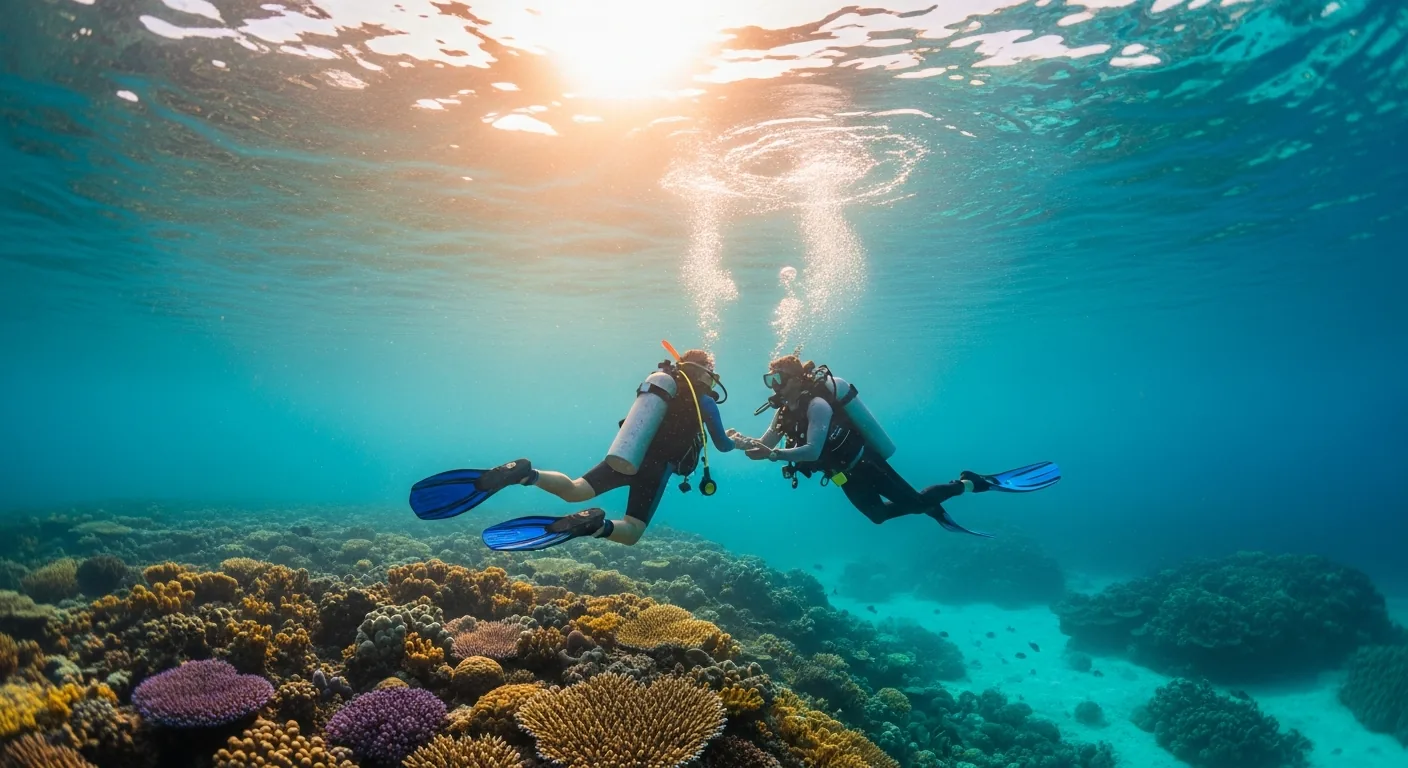
The turquoise water shifts from sapphire to aquamarine as the small outrigger boat cuts through the Lombok Strait. Below, a world of intricate coral gardens and languid sea turtles awaits. The air is warm, thick with the scent of salt and frangipani. For the aspiring diver, the Gili Islands present not just an opportunity, but a question. With three distinct islands, each offering a gateway to the same celebrated underwater ecosystem, the choice of where to take your PADI certification is the first, and perhaps most critical, decision of your subaquatic education. This is not about finding a dive school; it’s about selecting a base, an atmosphere, and a tempo that aligns with your approach to learning and exploration. See also: see Gili Air Diving Course’s Home.
The central problem for many is distinct personalities of Gili Trawangan, Gili Meno, and Gili Air. Trawangan, the largest, pulses with a youthful energy. Meno is a quiet, near-solitary retreat. And Gili Air? It resides in a carefully calibrated space between the two. Deciding which island will host your PADI Open Water or Advanced course dictates the entire character of your experience, from the instructor-to-student ratio to the quality of your evening meal. Here, we provide a detailed analysis to guide your choice, focusing on why Gili Air presents a superior proposition for focused, high-caliber dive training. See also: Gili Air Diving Course.
The Gili Archipelago: A Primer on Indonesia’s Premier Dive Training Ground
Located off the northwest coast of Lombok, the Gili Islands archipelago consists of three coral-fringed islets that became a focal point for marine tourism in the 1990s. The islands are part of a 2,954-hectare marine protected area, established in 2009 to preserve their significant biodiversity. The region’s appeal for divers is rooted in its accessibility, consistently favorable conditions, and rich marine life. Water temperatures remain a consistent 27-29°C (81-84°F) throughout the year, while visibility frequently extends beyond 25 meters. This trio of islands sits in the Coral Triangle, an area recognized for hosting more than 76% of the world’s coral species and over 2,000 species of reef fish. See also: explore Contact.
The dive sites—over 25 in total—are shared between the islands, with boat journeys from any Gili rarely exceeding 20 minutes. This means that regardless of your base, you can access renowned sites like Shark Point, Manta Point, and the historic Japanese Wreck from World War II, a patrol boat resting at a depth of 45 meters. The key differentiator is not the diving itself, but the environment from which you prepare, learn, and decompress. The choice of island profoundly influences the structure and quality of your gili air padi course.
Gili Trawangan: The High-Volume, High-Energy Option
Gili Trawangan, or ‘Gili T’, is the most developed and cosmopolitan of the islands. With more than 25 registered dive centers, the market is competitive, often driving PADI Open Water course prices down to the $400-$420 USD range. The island’s infrastructure is built around a constant influx of backpackers and party-goers, resulting in a vibrant, and often loud, social scene. For a diver, this can be a double-edged sword. See also: explore Padi Open Water Course.
The advantage is choice and a guarantee of a lively atmosphere after your dives. The disadvantage is the potential for larger class sizes. To maintain competitive pricing, some centers may run courses with up to six or even eight students per instructor. According to PADI standards, the maximum ratio is 8:1, but for foundational skills like buoyancy control and emergency procedures, a smaller group is demonstrably more effective. As Dr. Alain Foret, a marine biologist and PADI Course Director with over 20 years of experience in Southeast Asia, notes, “In a larger group, individual feedback on trim and breathing technique can be diluted. The first 20 dives shape a diver’s habits for life; personalized attention during certification is not a luxury, it’s a necessity for creating a competent, confident diver.” For those who thrive on social energy and are confident in a fast-paced learning environment, Gili Trawangan can be a viable choice. However, those seeking more focused instruction may find the constant activity a distraction from the serious business of learning to dive safely.
Gili Meno: The Quietist’s Retreat for Undistracted Learning
Gili Meno represents the opposite end of the spectrum. With a permanent population of only around 500, the island is a sanctuary of quiet beaches and minimal development. There are fewer dive centers, and the pace of life is significantly slower. This tranquility extends to the dive courses. Classes are almost invariably small, often with a 2:1 or even 1:1 student-to-instructor ratio. This allows for an exceptionally high degree of personalization, making it an excellent choice for anxious beginners or those who want to absorb the theory and practical skills without external pressures.
The primary drawback of Meno is its lack of amenities. Post-dive options are limited to a handful of quiet restaurants and beachside warungs. For a solo traveler or someone looking to connect with other divers, the isolation can be pronounced. The cost of a PADI course on Meno might be slightly higher, reflecting the personalized service, typically in the $450-$480 USD range. While the learning environment is pristine, the overall experience can be one-dimensional. The island is perfect for a dedicated dive-and-read holiday, but less so for those who want a more balanced travel experience. Accessing specific dive sites like the northern reefs can also take marginally longer from Meno’s southern-facing boat launches.
Gili Air: The Synthesis of Refined Instruction and Island Sophistication
Gili Air offers a compelling synthesis, capturing the best attributes of its neighbors while carving out its own distinct identity. It possesses a sophisticated social fabric without Trawangan’s relentless party scene and a peaceful atmosphere without Meno’s seclusion. This balance makes it the premier location for a gili air diving course. The island attracts a clientele of discerning travelers, couples, and dedicated divers who appreciate quality instruction and a comfortable, relaxed environment.
At Gili Air Diving Course, we structure our PADI programs to reflect this ethos. Our PADI Open Water courses maintain a strict maximum of four students per instructor, ensuring each participant receives ample one-on-one time. This commitment to quality instruction is critical. Consider the skills learned during the Gili Air Open Water course: mastering neutral buoyancy, perfecting mask clearing, and practicing emergency ascents. These are not skills to be rushed or learned in a crowded group. Our approach ensures you don’t just pass the test; you become a proficient and self-assured diver. The island’s east coast provides calm, shallow, sandy-bottom areas ideal for initial confined water skills training, a superior alternative to crowded swimming pools used by some centers on Trawangan.
Furthermore, Gili Air is home to unique conservation initiatives like the Bio-Rock project, which uses low-voltage electricity to accelerate coral growth on artificial reefs. Training here provides an opportunity to witness proactive marine conservation firsthand. After a day of training, the island offers a curated selection of high-quality restaurants, sunset bars, and yoga studios—a perfect complement to the physical and mental engagement of a dive course.
A Comparative Analysis: Dive Training on the Gili Islands
To make an informed decision, a direct comparison of key factors is essential. The following table breaks down the typical experience for a diver undertaking a PADI certification course on each of the three islands.
| Feature | Gili Trawangan | Gili Meno | Gili Air |
|---|---|---|---|
| Atmosphere | Vibrant, high-energy, party-centric | Tranquil, isolated, romantic | Sophisticated, relaxed, balanced social scene |
| Typical Student/Instructor Ratio | 4:1 to 8:1 | 1:1 to 2:1 | 2:1 to 4:1 (Gili Air Diving Course max 4:1) |
| PADI Open Water Avg. Price (USD) | $400 – $420 | $450 – $480 | $430 – $460 |
| Dive Site Access | Excellent, numerous operators | Good, slightly longer boat rides to some sites | Excellent, centrally located for all major sites |
| Post-Dive Activities | Extensive: bars, clubs, restaurants | Limited: quiet dining, beach relaxation | Curated: quality restaurants, sunset bars, yoga |
| Ideal For | Budget-conscious social travelers, confident learners | Nervous beginners, couples, those seeking solitude | Discerning learners, solo travelers, divers seeking quality |
This data illustrates a clear value proposition. While Gili Trawangan may offer a slightly lower entry price, the investment in a gili air dive course translates directly into a higher quality of instruction and a more conducive learning environment, without the extreme isolation of Gili Meno.
PADI Certification Pathways with Gili Air Diving Course
We offer a complete range of PADI recreational dive courses, each designed to build upon the last, creating skilled, environmentally-aware divers. Our programs are not just about certification cards; they are about fostering a deep competence and appreciation for the marine world.
- PADI Open Water Diver: This is your entry into the underwater world. The course takes 3-4 days and consists of knowledge development, confined water dives to learn basic skills, and four open water dives. Upon completion, you are certified to dive to a maximum depth of 18 meters (60 feet). Our comprehensive PADI Gili Air Open Water course is priced at $450 USD.
- PADI Advanced Open Water Diver: Ready to expand your skills? This 2-3 day course involves five adventure dives. Two are mandatory—Deep and Underwater Navigation—and you choose the remaining three. Popular options in the Gilis include Wreck Diver (on the Gili Trawangan Bounty Wreck), Peak Performance Buoyancy, and Fish Identification. This certification deepens your confidence and qualifies you to dive to 30 meters (100 feet). The course cost is $410 USD.
- PADI Rescue Diver: Often described by dive professionals as the most rewarding course. Over 3-4 days, you will learn to prevent and manage dive emergencies, developing your problem-solving skills and becoming a more capable dive buddy. This is a serious, challenging course that builds immense confidence. Prerequisites include Advanced Open Water certification and a valid EFR (Emergency First Response) certificate within the last 24 months.
Choosing to complete your certification here means access to a diverse portfolio of dive sites. Practice navigation at Hans Reef, a sprawling coral garden teeming with anemonefish and scorpionfish. Conduct your deep dive at the Gili Air Wall, which drops from 5 to 30 meters. Every training dive is an exploration of this vibrant ecosystem, guided by our experienced PADI professionals.
Actionable Steps for Planning Your Dive Certification
The journey from consideration to certification involves a few key logistical steps. The Gili Islands are accessible primarily from Bali and Lombok. From Bali, fast boats depart daily from Padang Bai harbor, with the journey taking approximately 90-120 minutes and costing between $35 and $50 USD one-way. It is advisable to book tickets at least a day in advance, especially during the high season (July-August and December-January).
The optimal time to visit for diving is during the dry season, from April to October, when weather conditions are most stable and water visibility is at its peak. Accommodations on Gili Air range from boutique bungalows to more luxurious small resorts, and it is wise to book these in conjunction with your dive course. We can provide recommendations for partner accommodations that meet our standards of quality and comfort.
Your final action is to select the right course and secure your spot. A gili air diving course is an investment in a lifelong skill. By choosing a program that prioritizes small groups, expert instruction, and a balanced island environment, you are setting the foundation for decades of safe and profound underwater exploration.
Contact Us to Reserve Your Gili Air Diving Course
The choice is clear. For a PADI certification experience that combines rigorous, personalized training with a sophisticated island setting, Gili Air is the definitive option. Contact our dive planning specialists to discuss your goals and reserve your place in the water.
Brand: Gili Air Diving Course
Phone: 0811-3941-4563
Email: [email protected]
Office: Jalan Sunset Road No. 88, Kuta, Badung, Bali 80361